
If you’ve ever found yourself Googling “do I need a will or a trust?”—you’re not alone. These two essential estate planning tools often get mentioned in the same breath, but they serve different purposes and offer distinct benefits. Here’s a breakdown to help you understand which one (or both!) might be right for you.
What Is a Will?
A will is a legal document that outlines your wishes after death. It covers:
- Who gets your assets
- Guardianship for minor children
- Your chosen executor to carry out your instructions
Wills are straightforward and generally less expensive to create, but they must go through probate—the court-supervised process of distributing your assets. This can mean delays, legal fees, and a lack of privacy since probate records are public.
What Is a Trust?
A trust is a legal arrangement that lets you transfer assets into a separate entity during your lifetime (or at death), which are then managed according to your rules. Trusts can be:
- Revocable (Living Trusts): You maintain control and can change or cancel it anytime.
- Irrevocable: Once established, changes are limited, but it can offer tax and asset protection advantages.
Benefits of a trust include:
- Avoiding probate
- Privacy for your estate
- Faster, smoother asset distribution
- Ongoing control of assets, even after death (think: staggered inheritance or care for a loved one)
Key Differences at a Glance
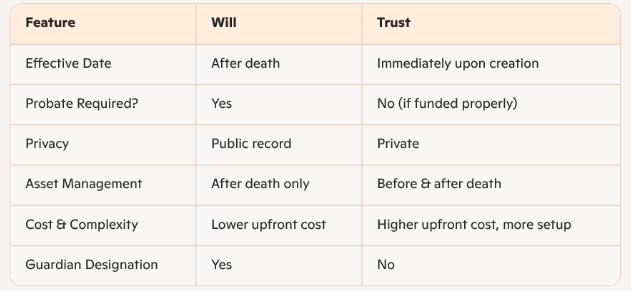
Final Thoughts
So which one should you choose? The best estate plan often includes both—a will to name guardians and handle personal wishes, and a trust to streamline asset management and avoid probate.
Your life isn’t one-size-fits-all, and neither is your legacy. A thoughtful estate plan ensures your wishes are respected, your loved ones are protected, and your future feels a little less uncertain.
Wandling Law has provided estate planning guidance to individuals throughout Minnesota since 1997. Call David Wandling at 952.237.0599 to discuss your questions and needs.
Disclaimer: This blog post is for general informational purposes only and does not constitute legal advice. Reading this content does not create an attorney–client relationship with Wandling Law. Minnesota law is fact-specific and may change, so you should consult a qualified attorney about your particular situation.